
English
English
Views: 0 Author: Site Editor Publish Time: 2026-09-04 Origin: Site


Relying on a single nominal micron rating is the most common point of failure in industrial filtration specification. Engineers often select a fabric based on a theoretical number, only to face immediate operational bottlenecks on the production floor. Misaligned pore sizes in filtration media lead to cascading operational failures. You will experience premature cloth blinding, poor cake release, extended cycle times, and compromised filtrate clarity. These issues halt production and drive up maintenance labor.
To achieve optimal solid-liquid separation, you must look beyond basic ratings. Engineers need to evaluate precise pore architecture, weave patterns, fiber dimensions, and empirical particle size distribution (PSD) data. This comprehensive approach ensures you specify the correct media for your exact slurry conditions. You will learn how to balance retention and flow, prevent material leakage, and optimize your filter press performance for maximum throughput.
A stated micron rating is only a baseline; the actual particle size distribution (PSD) of the slurry dictates the required pore geometry and weave tightness.
Permeability and particle retention are competing forces; optimizing pore size requires balancing flow rates against acceptable bleed-through.
Monofilament yarns inherently resist blinding and offer superior cake release compared to multifilament alternatives, but they require highly precise pore sizing to prevent fine particle leakage.
Pore size is not just about the opening; it is heavily influenced by fiber diameter, thread count, and overall fabric weight, which collectively dictate tensile strength and clogging resistance.
Double-layer monofilament designs can effectively bridge the gap between high mechanical tensile strength and fine particle retention in high-pressure applications.
Defining success criteria requires a clear understanding of your operational goals before you even look at a fabric sample. You must establish baseline requirements for filtrate clarity, target cycle times, and acceptable moisture content in the discharged filter cake. A properly specified solid liquid separation filter cloth acts as the mechanical foundation for all these performance metrics. If the engineered pores are too large, excessive suspended solids pass directly into the filtrate. This forces the plant to implement secondary polishing steps, like bag filters or cartridge housings, which increases maintenance overhead. If the pores are too tight, the filter press takes hours to fill. The feed pump deadheads prematurely, and the resulting cake remains wet, sloppy, and difficult to discharge into the hopper below.
Nominal micron ratings provide a general, often misleading, classification. A nominal rating simply indicates that a fabric will retain a certain percentage of particles at that specific size under laboratory conditions. Absolute ratings attempt to guarantee the retention of nearly all particles at the specified micron level. However, woven fabrics do not feature perfectly spherical holes. The mechanical intersection of warp (lengthwise) and weft (crosswise) yarns creates rectangular, square, or highly irregular pore shapes depending on the weave pattern.
A long, needle-like particle might easily pass through a rectangular pore if it aligns vertically with the flow path, even if its overall mass suggests the cloth should retain it. Theoretical spherical measurements fail to account for the dynamic behavior of irregular, jagged, or compressible solids under intense hydraulic pressure. You must evaluate the actual geometry of the weave rather than relying entirely on a standardized micron number printed on a specification sheet. Field engineers know that a 50-micron plain weave performs entirely differently than a 50-micron twill weave when subjected to a 100 PSI feed pump.
Designing a filtration system based on the average particle size guarantees operational failure. You must analyze the full Particle Size Distribution (PSD) curve using laser diffraction or detailed sieve analysis. Focus specifically on the D10, D50, and D90 values. The D10 represents the finest 10% of your particles. These fines are directly responsible for blinding tight pores. The D50 is the median size, and the D90 represents the coarsest 10%. The D90 particles are the heavy lifters; they help build the initial permeable filter cake on the surface of the cloth.
Slurries with wide particle size distributions present unique mechanical challenges. A broad spread of fine and coarse particles complicates the initial bridging phase. If you size the pores strictly for the D50 median, the D10 fines will bleed through continuously, causing dirty filtrate. Meanwhile, the D90 particles may wedge themselves permanently into the openings, causing irreversible plugging that no amount of pressure washing will fix.
Industrial filtration relies heavily on the mechanics of bridging. Correctly sized pores do not capture every single fine particle immediately upon pump startup. Instead, they allow the initial surge of coarse D90 particles to form a permeable pre-coat over the fabric. This established filter cake then performs the actual micro-filtration, capturing the finer D10 solids. The cloth simply acts as a robust support structure for the cake. If the pores are too large, the bridge never forms, and the cloth bleeds indefinitely.
Comparing yarn architectures establishes baseline capabilities for specific slurry types. The physical structure of the polymer fiber directly dictates how the fabric interacts with suspended solids under high feed pressures. You cannot swap these materials interchangeably without drastically altering the performance of the filter press.
A monofilament filter cloth is constructed from single, continuous, smooth extrusions of polymer, typically resembling heavy-duty fishing line. These solid strands offer exceptionally high tensile strength and maintain a rigid, predictable structure even under severe mechanical stress. Conversely, a polypropylene multifilament filter cloth consists of twisted bundles of dozens of microscopic fine fibers spun together into a single, thicker yarn.
Under the intense pressure of a filter press feed pump, monofilament structures maintain rigid, consistent pore sizes. The solid yarns do not compress, flatten, or deform easily. Multifilament yarns act like dense sponges. As hydraulic pressure increases inside the filter chamber, the twisted bundles compress against each other. This dynamic compression alters the effective pore size mid-cycle. Worse, it often traps jagged particles within the yarn bundle itself as the pressure fluctuates during pump strokes.
Surface friction plays a massive role in operational efficiency and operator safety. Monofilament yarns possess a smooth, glass-like surface finish. Multifilament yarns have a rough, textured surface due to the twisted fine fibers. This texture inherently grips moisture, biological organics, and sticky clay-like solids.
Multifilament cloths trap fine, sticky particles deep within the yarn matrix. This phenomenon, known as depth filtration, leads to irreversible blinding in high-solids applications. Once particles embed inside the twisted bundle, standard washing protocols cannot dislodge them. A 3000 PSI pressure washer will simply drive the particles deeper into the yarn. The cloth loses permeability rapidly over a few cycles, forcing premature replacement.
Monofilament media operates strictly via surface filtration. Particles remain on the exterior of the smooth yarns. When the hydraulic rams retract and the filter press opens, the lack of surface friction ensures rapid, clean cake release. Heavy, dry cakes drop effortlessly into the bunker below. This drastically reduces the need for operators to manually scrape the plates with spatulas, saving hours of labor and preventing accidental damage to the fabric.
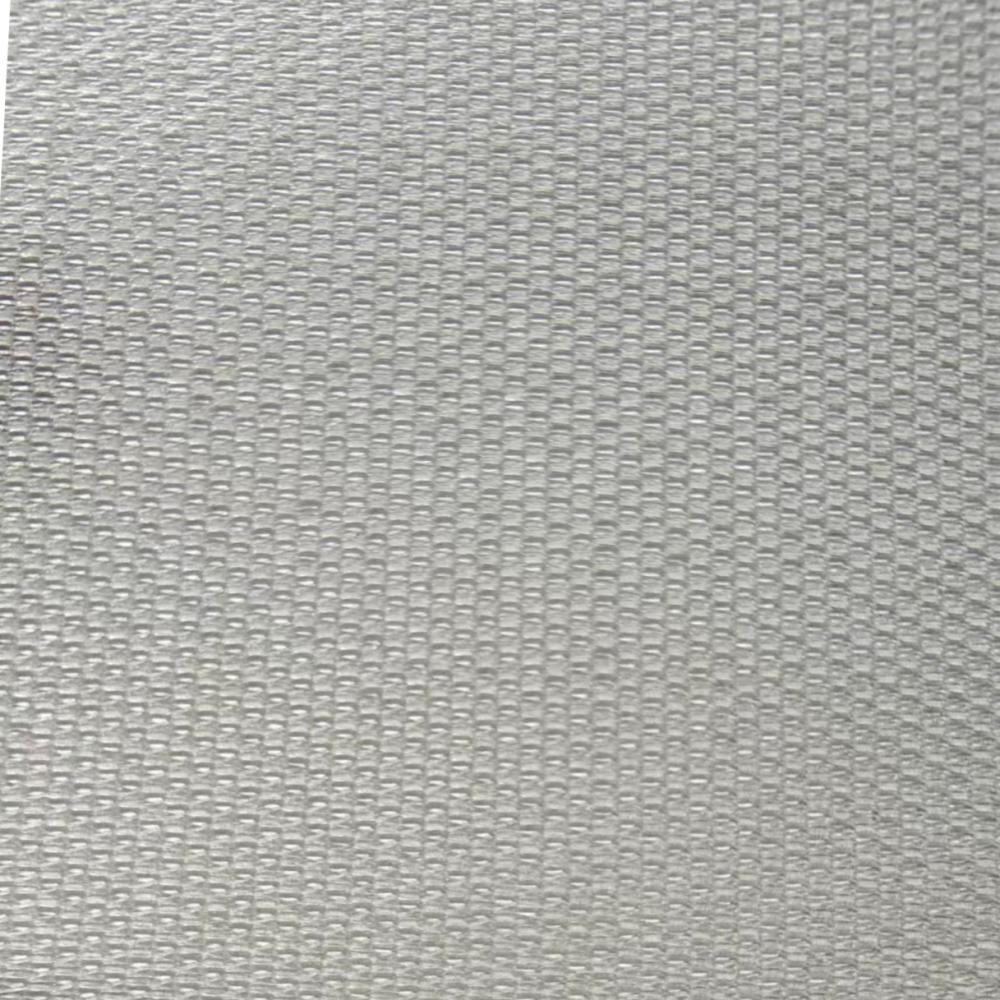
Translating technical fabric specifications into operational outcomes requires understanding the physical variables that construct the pore. You must evaluate how individual threads come together on the industrial loom to form the filtration matrix. A slight change in thread count or yarn diameter completely alters the flow dynamics.
Apparent Opening Size (AOS) defines the maximum spherical particle size that can pass through the cloth under specific dry-sieving testing conditions. It provides a much more accurate representation of retention capabilities than a nominal micron rating. AOS correlates directly with air and water permeability measurements, typically expressed in Cubic Feet per Minute (CFM) for air or Liters per square decimeter per minute (L/dm²/min) for liquids.
A fabric with a small AOS will naturally exhibit lower permeability. The resistance to fluid flow increases exponentially as the open area percentage decreases. You must match the AOS to your D50 or D90 particle size to ensure bridging occurs rapidly without choking the feed pump. If the AOS is too tight, the pump hits its maximum pressure setpoint before the chamber is even half full of solids.
The physical diameter of the extruded monofilament and the thread count mathematically determine the pore size. Thread count refers to the number of individual fibers per inch in both the warp and weft directions. Thicker yarns woven with a high thread count create extremely tight pores and yield massive tensile strength. Thinner yarns allow for more open area and higher flow rates but sacrifice mechanical durability against abrasive slurries.
Fabric weight, measured in ounces per square yard (oz/yd²) or grams per square meter (g/m²), dictates the structural depth and ruggedness of the cloth. Heavier fabrics withstand the violent hydraulic shock of diaphragm pumps and resist structural yielding over thousands of cycles. A higher fabric weight generally improves long-term clogging resistance by providing a deeper, more robust support matrix that prevents sharp particles from forcing their way through the yarn intersections.
The weaving technique alters the shape of the pore and the flow path of the filtrate. Different weaves serve entirely different operational profiles. You must select the weave based on the specific blinding tendencies of your solids.
Weave Type | Pore Structure | Particle Retention | Flow Rate | Cake Release |
|---|---|---|---|---|
Plain Weave | Tight, direct path | Highest initial retention | Lowest | Fair (prone to surface blinding) |
Twill Weave | Diagonal channels | Balanced | Moderate | Good |
Satin Weave | Complex, elongated paths | Lower initial retention | Highest | Superior |
Plain Weave: Features a simple over-one, under-one construction. It offers the tightest pore structure and highest initial particle retention. However, it delivers the lowest flow rate and is highly prone to surface blinding when processing irregular, slimy, or sticky particles.
Twill Weave: Yarns float over multiple intersecting yarns before going under, creating distinct diagonal pore channels. This design provides a balanced compromise between retention and flow, while offering excellent mechanical strength and flexibility over the filter plate pips.
Satin Weave: Features long yarn floats with minimal intersections. It creates complex, elongated pore paths that deliver the maximum flow rate and superior cake release. It relies heavily on rapid cake filtration, as its initial retention is lower than plain weaves. It is ideal for heavy, fast-settling slurries.
Raw woven fabric straight off the loom is structurally unstable. Thermal finishing, known as calendering, passes the fabric through heavy, heated steel rollers under immense pressure. This process flattens the monofilament intersections, physically reducing the pore size and locking the weave firmly in place. Calendering creates a smoother surface, further enhancing cake release and preventing particles from snagging on the yarn crossovers.
Heat setting exposes the fabric to precise temperatures under high tension in a stenter frame. This process prevents pore distortion and mechanical stretching during high-pressure filter press operations. Without proper heat setting, the fabric will yield under the 100 to 225 PSI feed pressure. This yielding causes the pores to widen mid-cycle, resulting in sudden filtrate turbidity just as the cake begins to compress.
Navigating the conceptual compromises inherent in filtration media selection dictates your ultimate production efficiency. You cannot maximize retention and flow rate simultaneously. Engineering a reliable solution requires deliberate, calculated trade-offs based on plant priorities.
An inverse relationship exists between tight pore sizes and filtration speed. High retention requires small pores, which inherently restrict fluid passage. When you specify overly tight pores to capture every single fine particle on the first pass, you dramatically extend cycle times. The feed pump must work significantly harder to push viscous liquid through the restricted open area. This leads to increased pump wear, higher energy consumption, and fewer cycles completed per shift.
Conversely, overly open pores prioritize speed but result in dirty filtrate. The initial bleed-through phase lasts longer, and the resulting filtrate may require recirculation back to the feed tank or secondary bag filtration to meet environmental discharge standards. You must find the exact intersection where bridging occurs quickly enough to clean up the filtrate without unnecessarily restricting the flow and extending the cycle time by hours.
Handling slurries with high concentrations of fines requires specific operational strategies. Defaulting to an overly restrictive pore size will immediately blind the cloth, turning the filter press into a bottleneck. Instead, utilize denser twill weaves that create tortuous paths to prevent material leakage while maintaining acceptable permeability.
Chemical conditioning often solves mechanical filtration problems. The introduction of coagulants and polymer flocculants artificially increases the particle size in the feed tank. By agglomerating microscopic fine solids into larger, stable flocs, you can specify a monofilament cloth with larger pores. This combination delivers high flow rates, crystal-clear filtrate, and completely eliminates the risk of cloth blinding.
Complex slurries, such as metal hydroxide precipitates or biological sludge, often demand conflicting fabric properties. Double-layer, or dual-weave, cloths feature a fine filtration layer on the slurry face and a coarse, high-drainage support layer against the filter plate. These two distinct layers are woven together into a single, integrated fabric on specialized looms.
The fine top layer ensures excellent particle retention and rapid bridging. The coarse bottom layer provides massive mechanical strength and creates a physical drainage gap that allows filtrate to evacuate quickly toward the plate ports. While double-layer cloths carry a higher upfront cost, the return on investment is substantial. They offer an extended operational lifespan, superior fine particle retention, and significantly reduced cycle times compared to single-layer alternatives.
Identifying failure modes during adoption prevents costly downtime. Transitioning to a new filter cloth specification requires careful monitoring, operator training, and proactive maintenance routines.
When a cloth stops passing fluid and cycle times double, you must identify the root cause immediately. Chemical scaling occurs when dissolved minerals (like calcium or silica) precipitate out of the slurry and crystallize directly on the fibers, turning the cloth stiff. Particle embedment happens when solids matching the exact pore size wedge themselves tightly into the openings. Biological fouling involves algae or bacterial growth coating the fabric in a slick, impermeable slime.
Implement proper cloth washing protocols based on the specific diagnosis. Use acid washes (like dilute hydrochloric or sulfamic acid) to dissolve mineral scale. Use alkali washes to break down organic fouling and grease. To prevent particle embedment, verify that your chosen pore size is not too close to the D50 particle size of your slurry. If it is, you need to shift the pore size up or down to avoid that critical wedging dimension.
High feed pressures pose a significant risk to fabric integrity, especially in large 1500mm or 2000mm filter presses. If the pump pressure exceeds the fabric's yield strength, the material will stretch across the drainage pips. This distortion widens the pores unevenly, causing sudden filtrate turbidity late in the cycle as the cake begins to compress and squeeze out remaining moisture.
Mitigate this risk by specifying high-tensile strength monofilament yarns and appropriate fabric weights for your operating pressure. Always verify with the manufacturer that the fabric has undergone rigorous heat-setting to lock the dimensional stability before fabrication. Inspect the cloths weekly for signs of wrinkling or sagging, which indicate mechanical yielding.
Never execute a facility-wide rollout based solely on theoretical calculations or a salesperson's recommendation. Bench-scale testing is mandatory. Utilize Buchner funnel tests in the lab to evaluate initial permeability, filtrate clarity, and blinding tendencies. Progress to pilot filter presses to simulate actual feed pressures, pump curves, and cake thicknesses.
These testing protocols validate your theoretical pore size calculations against empirical data. Measure the filtrate clarity, record the exact time required to form a solid cake, and analyze the final cake moisture content. Adjust the fabric specification based on these real-world results before ordering a full set of replacement cloths for your production presses.
Conduct a comprehensive Particle Size Distribution (PSD) analysis of your target slurry using laser diffraction to identify the exact D10, D50, and D90 values.
Request detailed Technical Data Sheets (TDS) for shortlisted fabrics, focusing strictly on Apparent Opening Size (AOS), fabric weight, and weave type rather than relying on nominal micron ratings.
Initiate bench-scale and pilot testing to validate pore performance, tracking filtrate clarity and cycle times under actual process conditions and pump pressures.
Implement strict, scheduled washing protocols tailored to your specific slurry chemistry to prevent irreversible particle embedment and mineral scaling before it hardens.
A: Weave type dictates the shape and directness of the pore. Plain weaves create tight, direct paths for high retention but low flow. Twill weaves form diagonal channels for balanced performance. Satin weaves create elongated, complex paths that maximize flow and cake release but rely heavily on cake filtration for retention.
A: Blinding occurs when the actual particle size distribution contains a high volume of fines (D10) that match or are slightly smaller than the actual pore geometry. It also happens if sticky solids embed in the weave or if chemical scaling coats the fibers, regardless of the nominal rating.
A: Choose multifilament cloth when you require depth filtration to capture extremely fine, non-sticky particles that would otherwise bleed through a monofilament surface. It is also useful in low-pressure applications where high flexibility and low initial cost are prioritized over rapid cake release.
A: AOS is measured by dry-sieving spherical glass beads of strictly controlled diameters through the fabric. The size of the beads that pass through determines the maximum effective opening of the pores, providing a realistic metric for particle retention capabilities.
A: Thicker fiber diameters and higher thread counts decrease pore size while increasing tensile strength. Higher fabric weight creates a deeper, more robust structural matrix that resists mechanical stretching and hydraulic shock, maintaining pore stability under high feed pressures.
A: Yes. The fine top layer ensures rapid bridging and high retention of fine particles, while the coarse bottom layer provides structural support and creates a wide drainage gap. This dual construction allows filtrate to exit quickly without compromising capture efficiency.
A: Higher permeability allows fluid to pass through the cloth with less resistance, significantly reducing the time required to fill the press and build the cake. Lower permeability restricts flow, extending cycle times and forcing the feed pump to work harder to achieve terminal pressure.


